
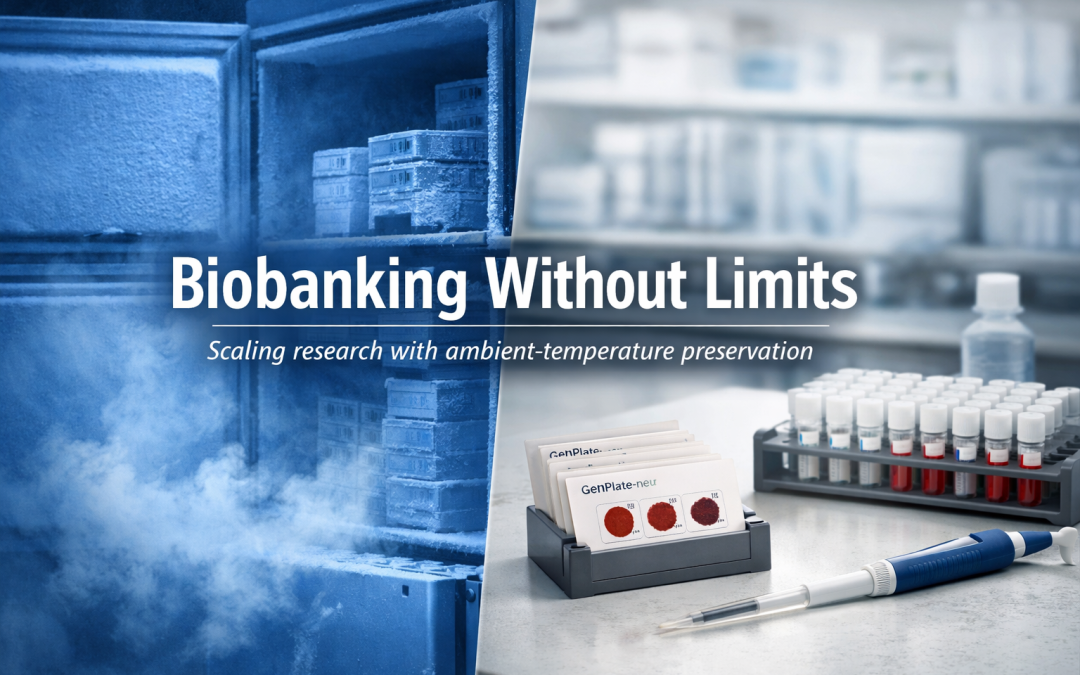
Biobanks play a foundational role in modern life science research. From drug discovery and target identification to population health studies and clinical trials, the quality of stored biological samples directly impacts the quality of scientific outcomes. As biobanking continues to expand globally, strong governance, efficient operations, and innovative technologies are reshaping how samples are collected, preserved, and used.
The Core of Biobanking
Effective biobanking begins with robust governance. This includes clear policies for ethical oversight, informed consent, data privacy, and regulatory compliance. Biobanks must align with local and international regulations while ensuring transparency, traceability, and responsible use of samples. Governance frameworks also define access rules, quality standards, and long-term sustainability strategies, ensuring samples remain valuable assets for years or even decades.
Operational Excellence in Biobanking
Day-to-day biobank operations focus on standardized workflows for sample collection, stabilization, processing, storage, and distribution. Best practices emphasize:
- Sample integrity and quality control
- Accurate labeling and data management
- Chain-of-custody documentation
- Reliable storage conditions
Traditionally, these operations rely heavily on cold-chain logistics, including freezers, liquid nitrogen, and temperature-controlled shipping. While effective, these systems are costly, energy-intensive, and logistically challenging, particularly for large-scale studies, remote sample collection, global clinical trials and long-term storage.
Scale, Cost, and Accessibility can be a Challenge
As biobanking grows, so do its challenges. Expanding collections, decentralized clinical trials, and the need to include underrepresented or remote populations put pressure on traditional infrastructure. Cold storage failures, high shipping costs, and limited access to freezing facilities can compromise sample quality or restrict participation altogether.
This is where innovation becomes transformative.
Changing the Paradigm with Dry-State Preservation Could Help Biobanks Scale
Innovative sample preparation technologies are redefining what is possible in biobanking. Products such as GenPlate-neu and ITSIprotect from ITSI Biosciences enable the collection, transport, and preservation of body fluid samples such as blood in a dry state and storage at ambient temperature.
These solutions help protect nucleic acids and some other critical biomolecules while eliminating the dependence on cold-chain logistics for every type of sample. The result is a paradigm shift in how biobanks operate.
Benefits for the Biobanking Ecosystem
By integrating dry-state, ambient-temperature preservation into biobanking workflows, organizations can:
- Maintain sample integrity during collection, handling, transport, and storage
- Reduce shipping and storage costs by eliminating or reducing reliance on dry ice and freezers
- Enable sample collection from remote or resource-limited areas
- Support decentralized and global clinical trials
- Improve scalability and sustainability of biobank operations
For biobanks, this means greater resilience, broader participant inclusion, and more consistent sample quality the key drivers of high-quality downstream data.
Supporting the Future of Biobanking
With over 21 years of experience, ITSI Biosciences supports the life science community through end-to-end bioanalytical services and innovative sample preparation products designed for real-world research challenges. By combining strong governance principles with next-generation preservation technologies, biobanks can move beyond traditional constraints and unlock new possibilities for discovery. As the biobanking industry evolves, embracing innovation is no longer optional, it’s essential. Technologies like GenPlate-neu and ITSIprotect demonstrate how smarter sample preservation during collection, handling, transport and storage can enhance operational efficiency, reduce costs, and ultimately accelerate scientific progress.
Better samples. Better data. Better outcomes.
